Kendo is the art of Japanese fencing. The term "Ken" (or tsurugi) refers to the sword, while "Do" (or michi) means the way or path. Together, "Kendo" translates to "The Way of the Sword," a discipline that serves as a lifelong journey of training and self-improvement.
Origin of Kendo
Modern Kendo retains only a faint resemblance to Kenjutsu and its feudal origins with samurai warriors, often portrayed in movies and television. Unlike many martial arts, Kendo has no single founder or exact date of origin. Its evolution is deeply intertwined with the samurai and centuries of Japanese culture.
By the end of the 12th century, Japan's central government had weakened, leading to the rise of feudalism. Groups of warriors formed local aristocracies, and with the establishment of the Shogunate in Kamakura, a new warrior class emerged. This class followed Bushido, "the way of the warrior," which emphasized bravery, loyalty, honor, self-discipline, and an acceptance of death. These principles continue to influence modern Kendo.
The samurai not only mastered swordsmanship but also valued learning and the arts. Though Kenjutsu, "the art of swordsmanship," had existed since the 8th century, it gained prominence during this time, incorporating religious and cultural elements. Sword-making became a revered craft, and many samurai practiced calligraphy and poetry.
During the late Muromachi period (1336-1568), known as the "Age of Warring Provinces," martial arts became even more essential. This era saw the rise of approximately 200 Kenjutsu schools, each led by a renowned swordsman. Training initially used real blades or wooden swords without protective gear, resulting in frequent injuries. These schools continued to flourish through the Tokugawa period (1600-1868), with the Ittoryu ("one sword school") exerting the greatest influence on modern Kendo.
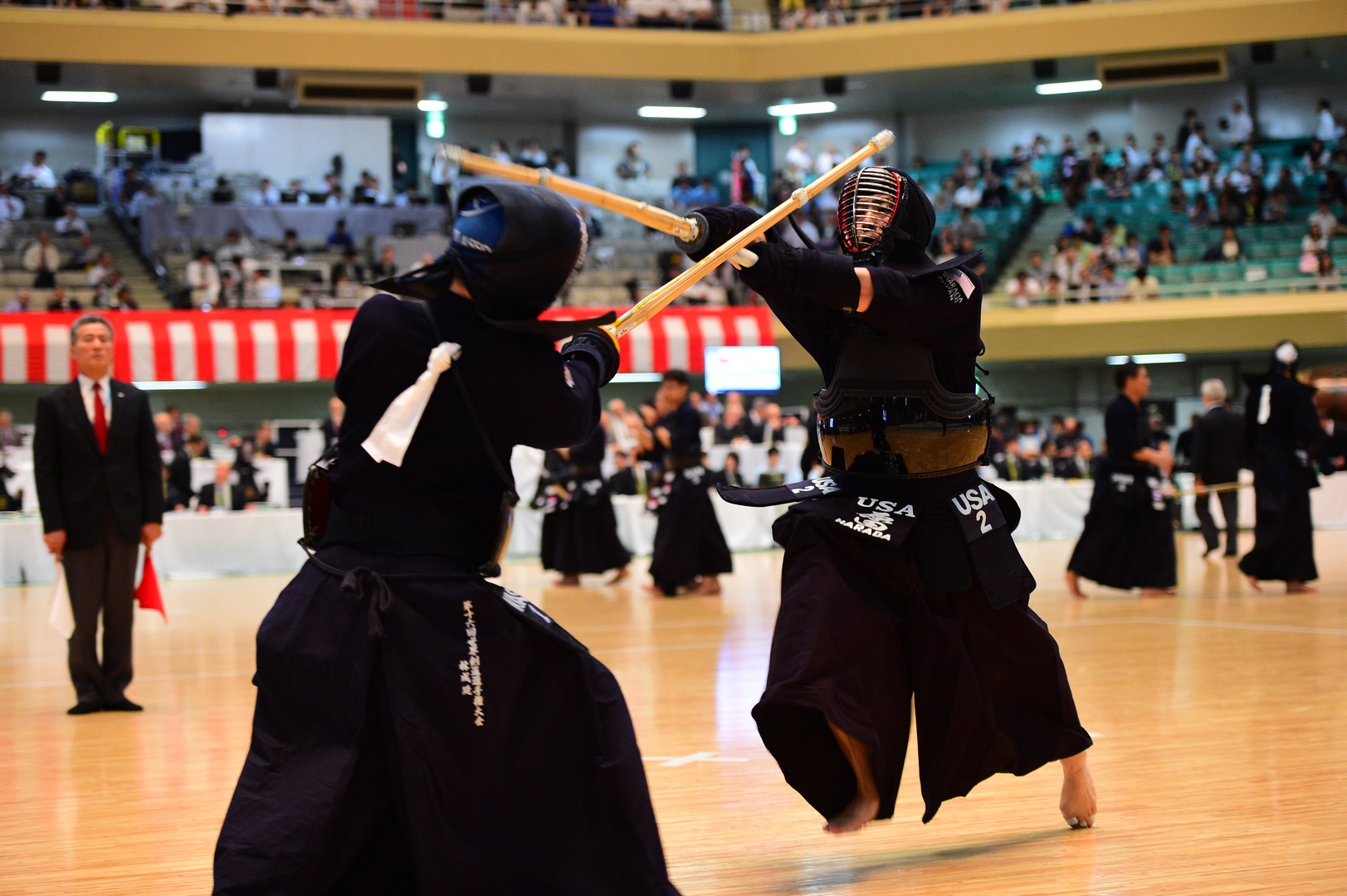
Kendo took its modern form in the late 18th century with the introduction of protective equipment—men (helmet), kote (gloves), and do (chest armor)—as well as the bamboo sword, or shinai. These innovations allowed practitioners to fully engage in sparring without injury, leading to the creation of standardized rules and practice formats.
With the Meiji Restoration (1868) and Japan’s modernization, Kendo declined temporarily. The samurai class was abolished, and carrying swords in public was outlawed. However, by 1887, Kendo was revived for training police officers. The Sino-Japanese War (1894-95) and Russo-Japanese War (1904-05) further renewed interest in martial arts.
In 1895, the Butokukai, an organization dedicated to martial arts, was established. By 1911, Kendo became part of Japan’s middle school physical education curriculum, and in 1912, the Nihon Kendo Kata, a set of standardized forms, was published. In 1939, Kendo became a mandatory subject for boys as Japan prepared for war.
After World War II, due to its association with militarism, Kendo was banned, and the Butokukai was dissolved. However, by 1952, a sport-oriented version called Shinai Kyogi was introduced, emphasizing competition over military training. Today, Kendo thrives under the guidance of organizations like the All Japan Kendo Federation and the International Kendo Federation.
Though modern Kendo has adapted to contemporary needs, it remains deeply rooted in tradition, continuing to foster character, self-discipline, and respect.
Kendo Philosophy
Each Dojo has its own interpretation of Kendo’s philosophy. Rather than providing a singular definition, students must explore and develop their own understanding through practice and experience.
Kendo Equipment
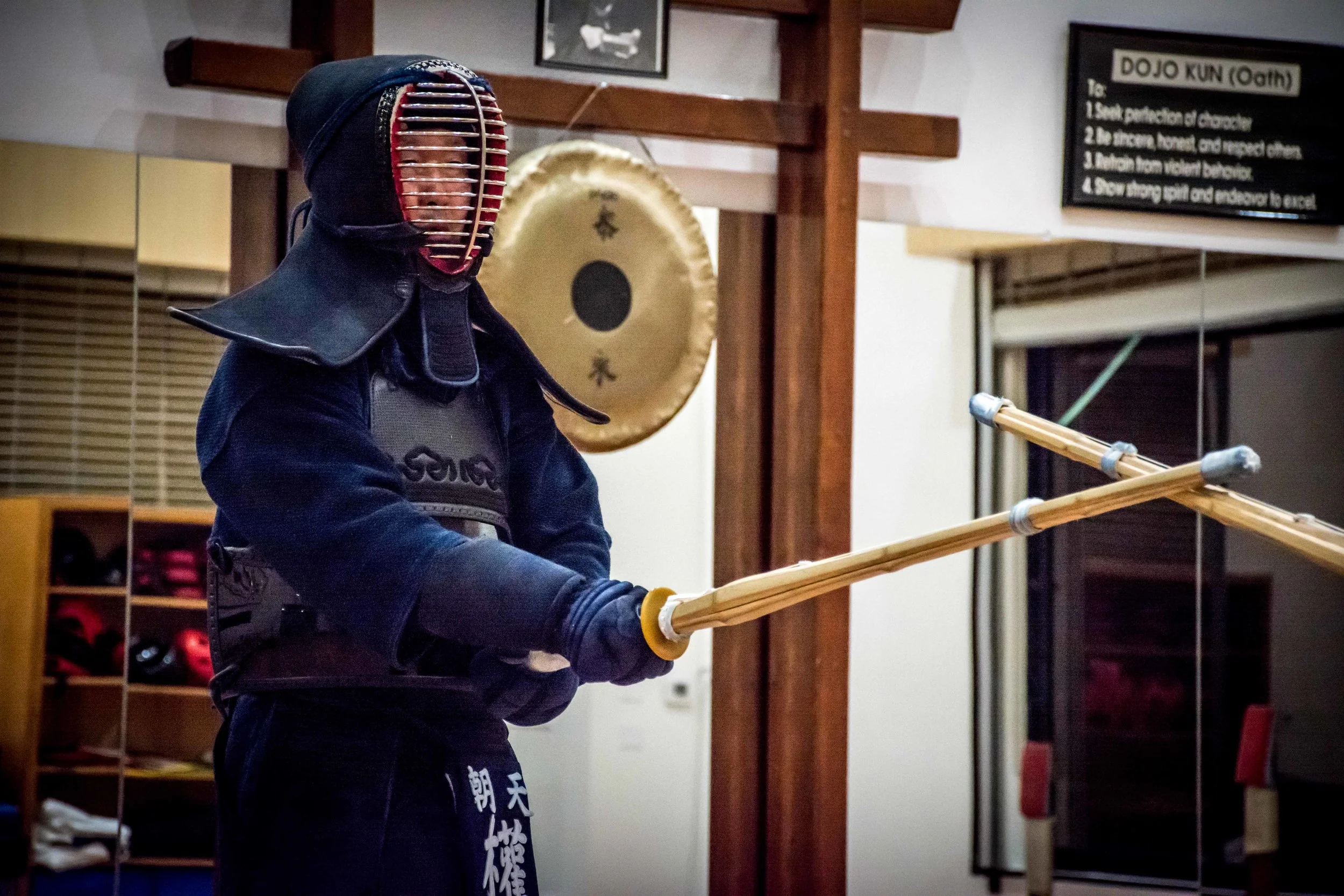
Kendo equipment includes swords, uniforms, and protective armor:
Bokken (or bokuto): A solid wooden sword used for kata (form) practice.
Shinai: A bamboo sword consisting of four staves bound together with leather, used for full-contact sparring.
Uniform (dogi): Consists of a cotton top (keikogi) and pleated trousers (hakama).
Armor (bogu): Includes four pieces:
Men: Helmet with face protection.
Do: Chest protector.
Kote: Padded gloves for hand and forearm protection.
Tare: Hip and groin protector.
Modern Kendo armor is inspired by the samurai's Oyoroi armor.
Kendo Practice
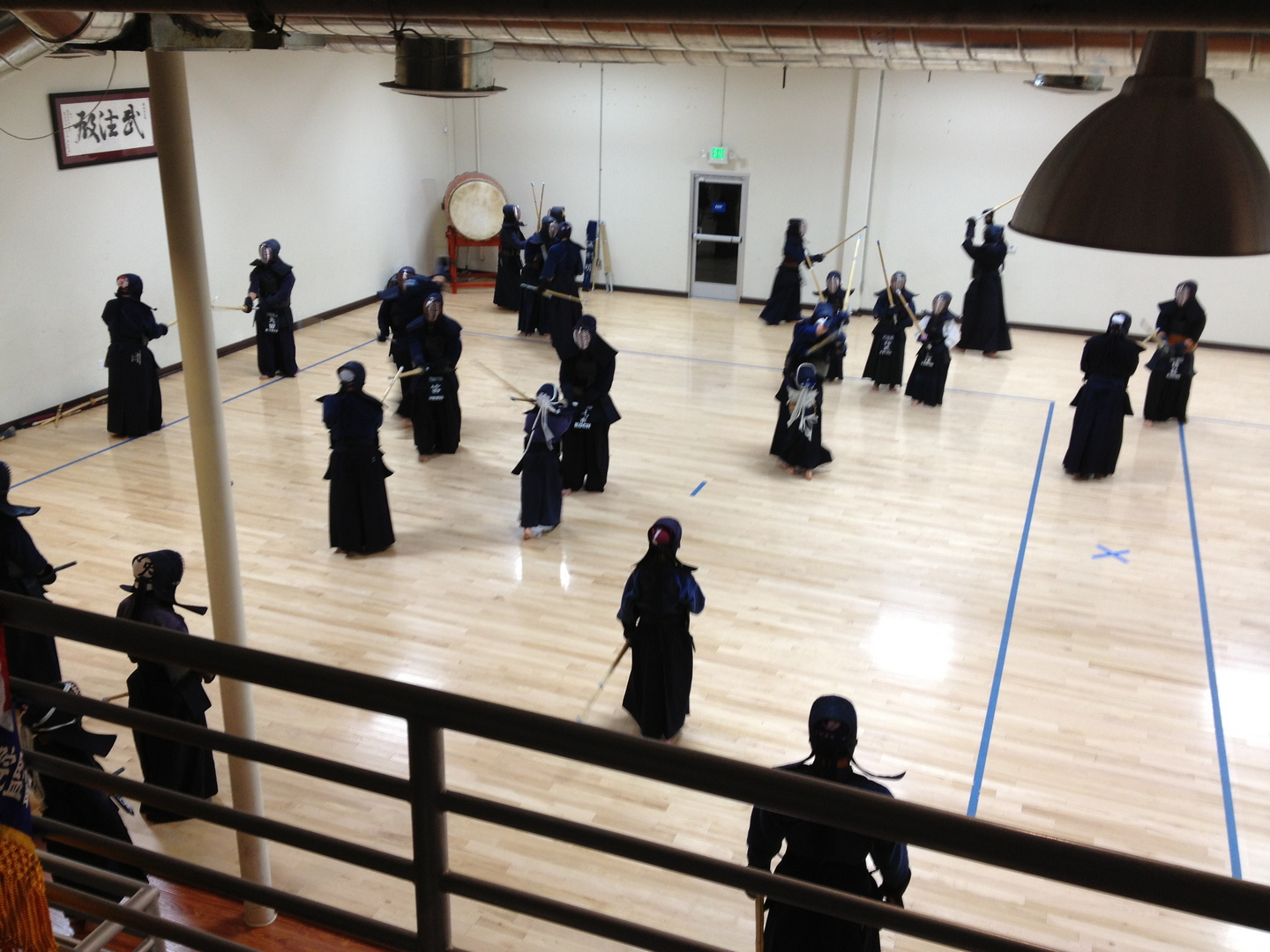
Kendo training incorporates various types of practice, each serving a distinct purpose in a student's development:
Kiri-Kaeshi: Repetitive strikes to the left and right men, emphasizing centering, distance, and precision while building stamina and spirit.
Waza-Geiko: Technique practice with a partner to refine different Kendo moves.
Kakari-Geiko: Short, intense attack drills designed to improve reaction speed and endurance.
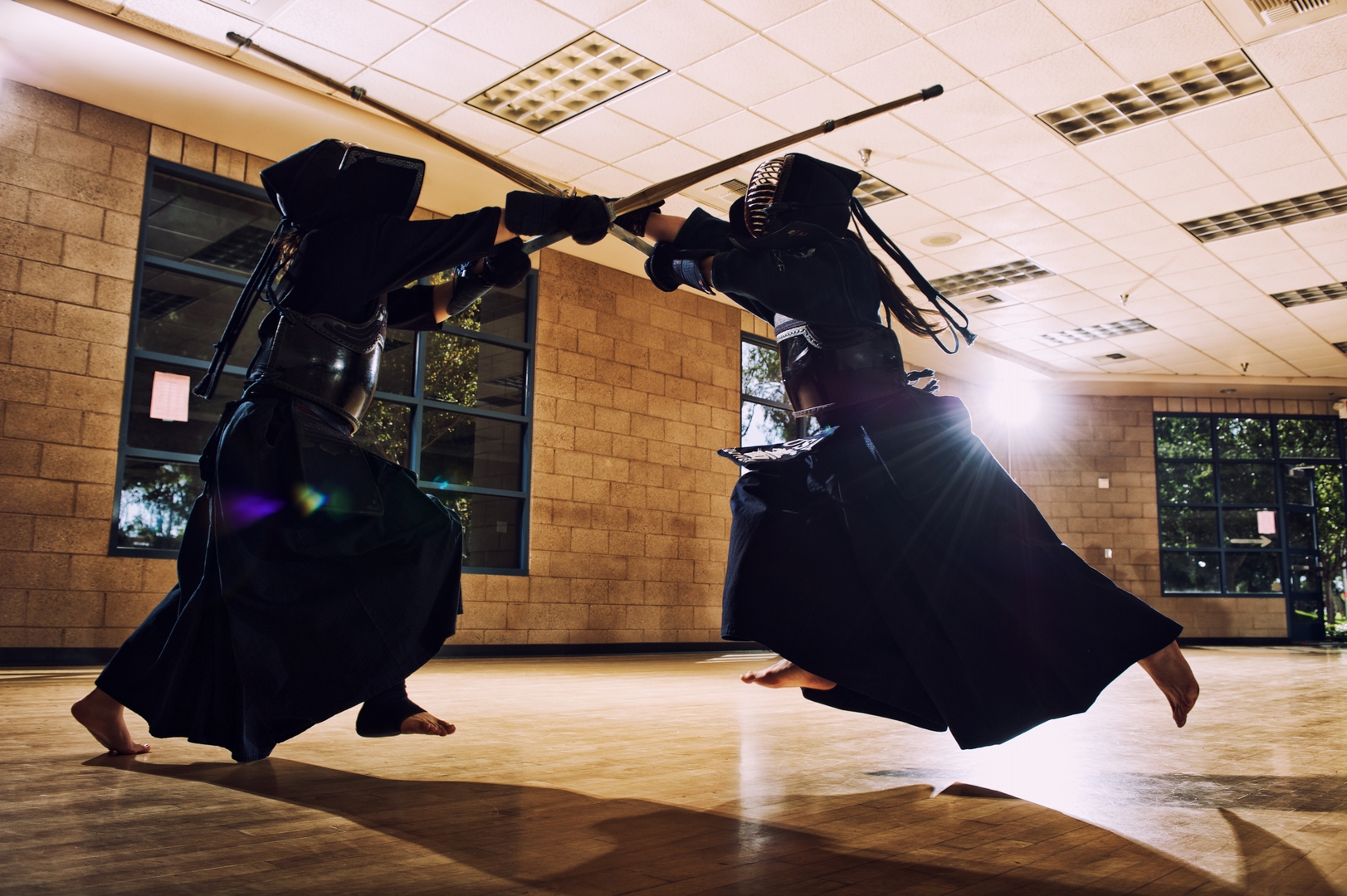
Ji-Geiko: Sparring sessions where practitioners apply their learned techniques against an opponent.
Gokaku-Geiko: Sparring between two students of similar skill levels.
Hikitate-Geiko: A senior practitioner guides a junior student through a practice session.
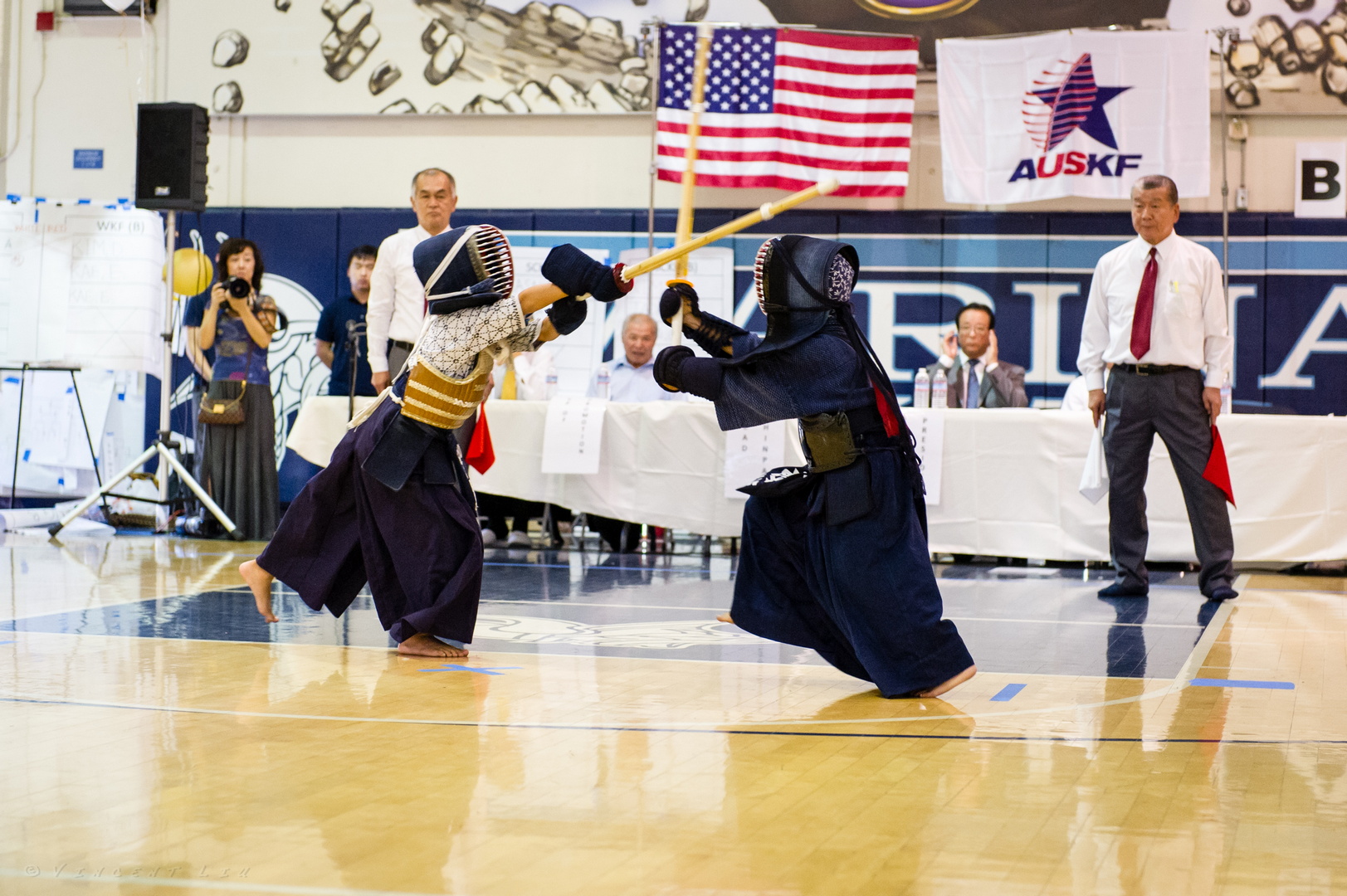
Shiai-Geiko: Competitive matches judged based on valid strikes.
Kendo, like all martial arts, demands discipline and dedication. Beginners start by learning etiquette (reigi), postures, footwork, and basic sword movements before progressing to armored training. Despite its competitive aspects, Kendo remains a path of personal growth, deeply embedded in history and tradition, ensuring its endurance for generations to come.